


- This event has passed.
American Admiralty Law in Salem and Boston, 1800–1840, and Its Legacy
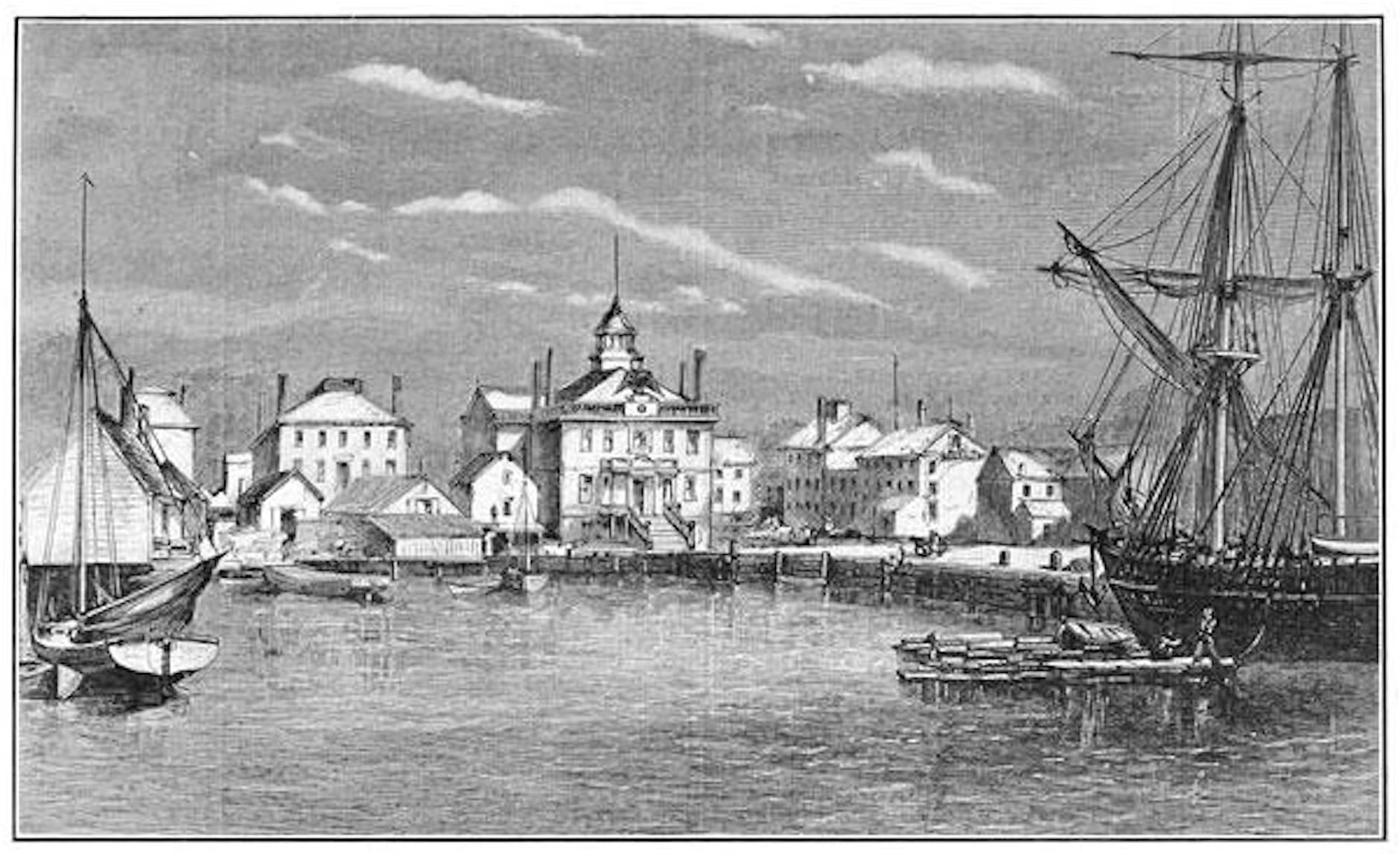
Judge William G. Young explores how Salem and Boston maritime conflicts (1800–1840) shaped early American admiralty law post Revolution.
Learn about the establishment of American Admiralty Law in Salem and Boston following the American Revolution, tracing how early 19th-century maritime conflicts in these port cities shaped the development of American jurisprudence. The lecture will examine how disputes over cargo, salvage, and prize cases during the period tested and refined the young nation’s legal system. Judge Young will also discuss the pivotal role played by Judge John Davis in establishing practical precedents for handling these cases — precedents that would go on to influence the broader framework of American admiralty law.
About the Speaker:
The Honorable William G. Young has served as a Judge of the United States District Court for the District of Massachusetts since 1985, following eight years on the Massachusetts Superior Court. A graduate of Harvard College and Harvard Law School, he served as a U.S. Army officer before beginning his legal career as law clerk to Chief Justice Raymond S. Wilkins of the Massachusetts Supreme Judicial Court. He later practiced law with Bingham, Dana & Gould and served as Special Assistant Attorney General and Chief Counsel to Governor Francis W. Sargent. An acclaimed teacher of evidence and trial advocacy, Judge Young has taught at Harvard, Boston College, and Boston University. He is also a prolific legal scholar and the author of several influential works on evidence, trial practice, and federal jurisprudence.
While admission is free space is limited; registration is strongly encouraged.
CLICK HERE to register
This program is part of the Conflict & Community: Salem, Essex County, and the American Revolution lecture series. This series is a partnership between Essex Heritage and Salem Maritime National Historical Park and highlights the unique role of Essex County communities during the American Revolution. CLICK HERE or more information about Conflict & Community programs.
