


The Battle of Gloucester Reenactment
The Battle of Gloucester
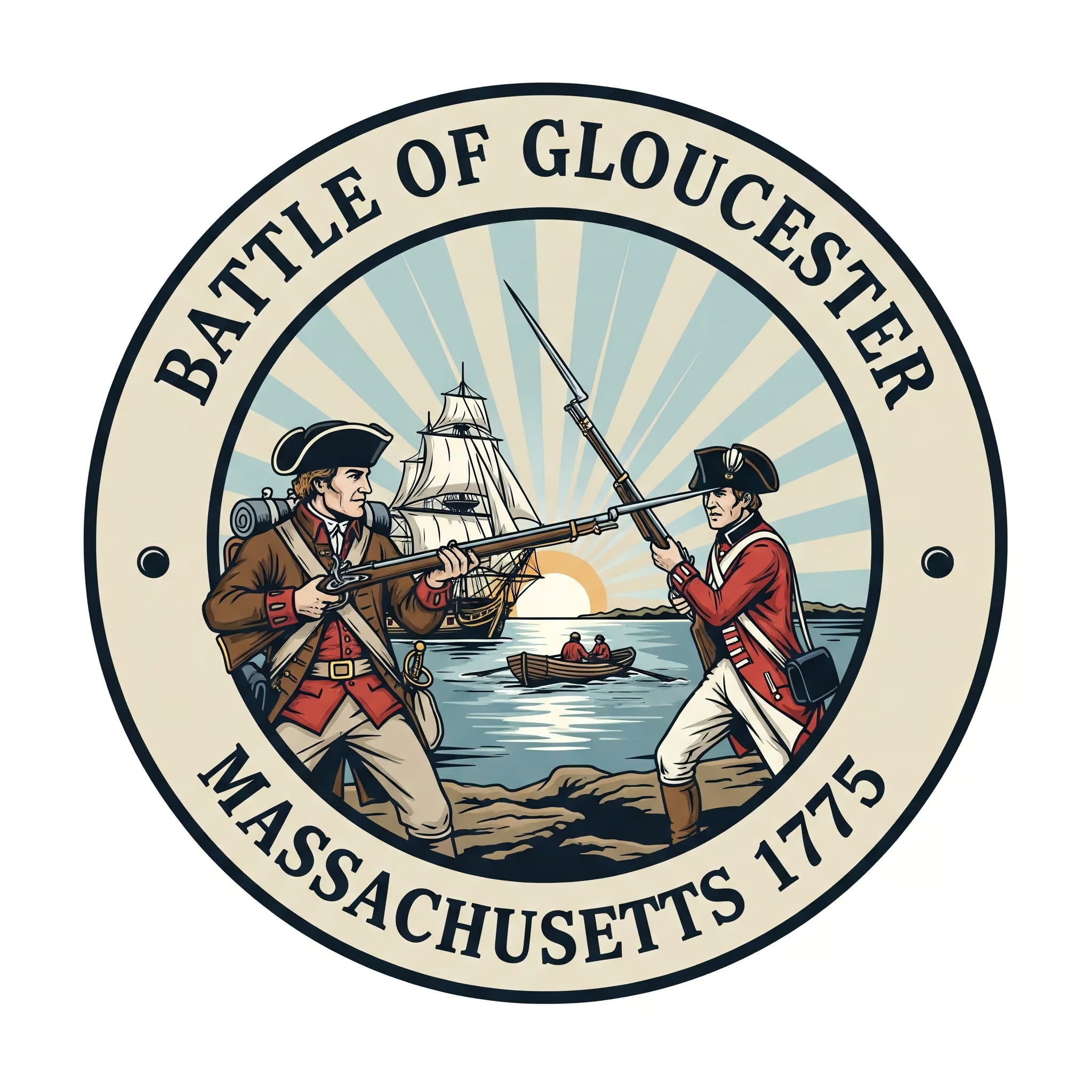
On a summer day in 1775, the British warship HMS Falcon sailed into Gloucester Harbor in pursuit of two colonial schooners. What followed became one of the first naval engagements of the American Revolution—and an unlikely victory for the townspeople of Gloucester. Captain John Linzee of the fourteen-gun sloop HMS Falcon had been ordered to disrupt American supply lines supporting the siege of Boston. After seizing one schooner at sea, he chased a second into Gloucester Harbor, where it ran aground near Five Pound Island. When alarm bells rang from the town meeting house, the local militia quickly assembled. Although lacking proper artillery, they improvised defenses by mounting swivel guns on makeshift carriages. As British landing parties attempted to board the grounded schooner and burn the town, Gloucester’s defenders opened fire from shore positions.
The Action
The engagement lasted from afternoon until 7 p.m. and included:
- British sailors and marines in whale boats attempting to seize the grounded schooner
- Musket fire from shore that killed three British sailors and wounded an officer
- The Falcon firing approximately 300 cannon shots at the town (damaging the meeting house but causing no casualties)
- Multiple failed British attempts to burn Gloucester, including one foiled when gunpowder exploded prematurely
- Hand-to-hand combat as militiamen captured British landing parties
The Outcome
Gloucester’s militia achieved a stunning victory, recapturing both schooners and taking 35 British sailors prisoner. Not a single townsperson was killed or wounded by the bombardment. The defeat humiliated Captain Linzee and demonstrated that determined colonists could stand against the Royal Navy.
This engagement later influenced Admiral Graves to authorize the burning of Falmouth (Portland, Maine) in October 1775—an act that helped convince the Continental Congress to establish the Continental Navy.
