

- This event has passed.
1776: Why Independence?
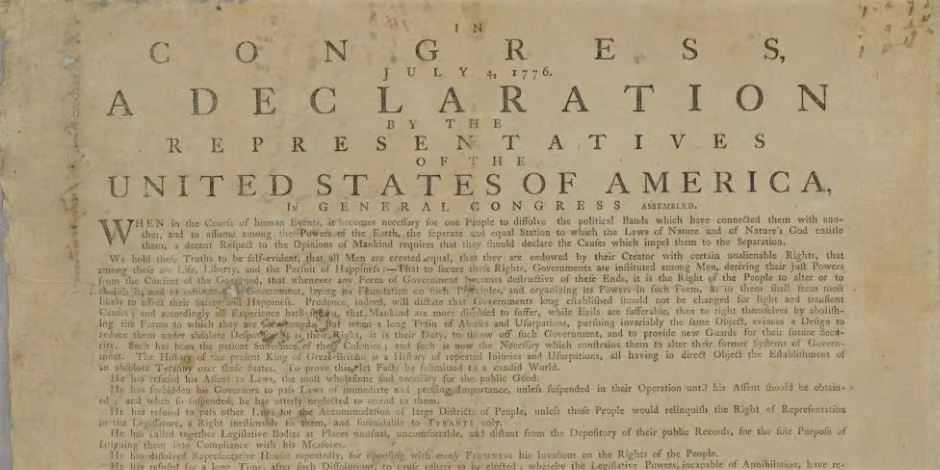
Join Dr. Robert Allison as he discusses the challenges, opportunities, and the role of Essex County as America declared independence in 1776.
Why did the American colonies declare Independence in 1776? What were the challenges, and what potential opportunities did they see? How did their thinking change from trying to preserve their long-cherished charter rights to announcing their arrival as an independent entity, equal among the powers of the earth to all other nations? What was the role of Essex County in this momentous decision?
Robert Allison, a professor of history at Suffolk University, also teaches at the Harvard Extension School. He has written a series of short books about the American Revolution, as well as histories of Boston and of Cape Cod. His longer works include publications on the Barbary Wars and Naval hero Stephen Decatur. He edited an edition of “The Interesting Narrative of Olaudah Equiano, or Gustavus Vassa, the African.” Allison created two classes for The Teaching Company’s series “The Great Courses,” one focused on colonial America (“Before 1776: Life in the American Colonies) and the other on Benjamin Franklin (“The Age of Benjamin Franklin”) His work draws from his teaching, which has covered all phases of American history, though his primary focus is the American Revolution and the early American republic. He is president of the Colonial Society of Massachusetts, a scholarly organization which publishes primary documents on early American history, a life-trustee of the USS CONSTITUTION Museum, and as chair of Revolution 250, Allison hosts its weekly podcast, a series of conversations on the Revolution with historians, museum curators, and reenactors.
While admission is free space is limited; registration is strongly encouraged.
CLICK HERE to Register

